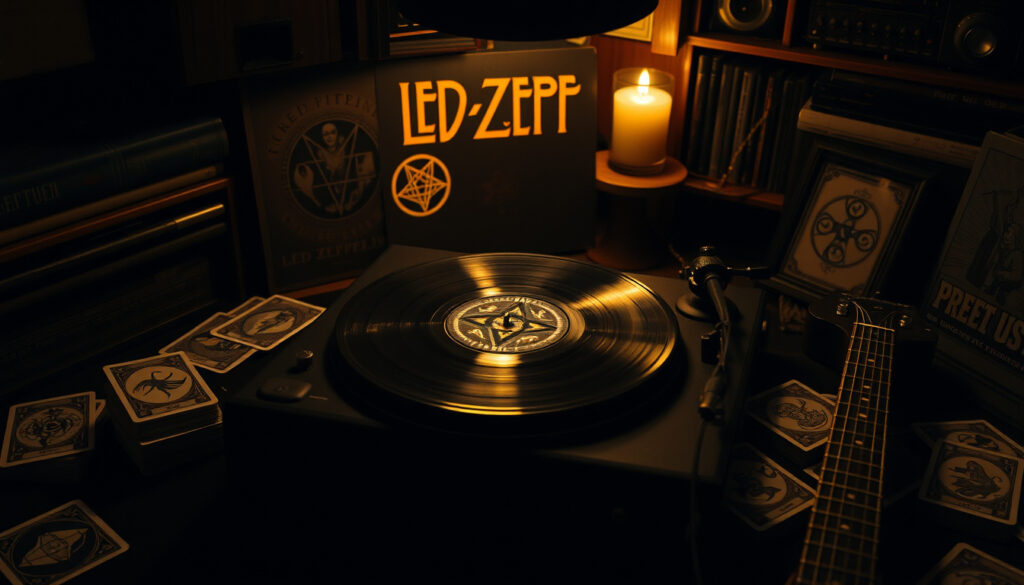
Led Zep Myths: Top Songs, Occult Rumors, and Rock Feuds
Half a century on, Led Zeppelin still sparks the kind of arguments most bands can only dream of: is “Stairway to Heaven” overplayed or immortal, was Jimmy Page a genuine occult scholar or a tabloid myth, and did they invent hard rock or just perfect it? The band sold more than 300 million records in barely over a decade, yet the folklore around them has a way of drowning out the music.
Albums sold worldwide: over 300 million · Years active: 1968–1980 · UK No. 1 albums: 8 · UK No. 1 singles: 1 · Rock and Roll Hall of Fame: 1995 · Grammy Awards: 5
Quick snapshot
- Jimmy Page bought Boleskine House, the Scottish manor tied to Aleister Crowley (The Sydney Morning Herald’s Page interview)
- Page has traced his Crowley interest to John Symonds’s biography The Great Beast (Rock and Roll Garage’s retrospective)
- Page has called Crowley a misunderstood figure and framed the interest as self-development, not worship (music journalist Tony Barrell’s Led Zeppelin feature)
- Whether “Stairway to Heaven” hides a deliberate backward message has never been established.
- The rumor that Robert Plant had a child with his wife’s sister remains unverified.
- The exact reason for David Bowie’s dislike of Jimmy Page is disputed.
- 1968: band formed in London; 1969: self-titled debut released (Wikipedia’s Led Zeppelin discography)
- December 4, 1980: band officially disbands (Tony Barrell’s Led Zeppelin history) (Wikipedia’s Led Zeppelin discography)
- The streaming era keeps “Stairway to Heaven” in daily rotation as the band’s most-played track.
- The 1995 Rock and Roll Hall of Fame induction formalized a legacy built in just 12 years.
Nine studio albums, four live records, and one towering hit that was never a conventional single — Led Zeppelin’s numbers tell a tighter story than any myth about them.
| Metric | Value |
|---|---|
| Formed | London, England (1968) |
| Final concert with Bonham | July 7, 1980 |
| Best-selling album | Led Zeppelin IV (37 million copies) |
| Highest-charting single | “Whole Lotta Love” (#4 US) |
| Studio albums | 9 |
| Live albums | 4 |
The pattern: Led Zeppelin was an albums band in a singles era — and that is exactly why the catalog outlived almost everything around it.
What song did Jimmy Page refuse to play?
“Stairway to Heaven.” Page kept it off television for years after its 1971 release, a refusal that turned the song into something the band could never fully control. As Wikipedia’s Stairway to Heaven article notes, the track was never released as a conventional US single — the song spread through album play and radio, not the charts.
Page’s television boycott made “Stairway to Heaven” forbidden fruit: the less the band played it, the more it demanded the room.
The refusal was never a snub. Page’s stated reason was practical: the song had grown so overwhelming that a TV stage would shrink it. The irony is that the boycott preserved the song’s scale — no small-screen version ever got the chance to disappoint.
The implication: a band big enough to ignore its own biggest hit ended up owing its legend to that very hit.
What are the top 10 songs of Led Zeppelin?
There is no official top ten, and no streaming chart will settle the argument either. The list below is the consensus core of Led Zeppelin’s catalog — the eight tracks that anchor the band’s discography, dominate every serious ranking, and keep the fan debates alive.
- “Stairway to Heaven” — the signature, and the band’s most-streamed track.
- “Whole Lotta Love” — their highest-charting US single, No. 4.
- “Kashmir” — the epic that defined the band’s second half.
- “Black Dog” — the riff that anchors Led Zeppelin IV.
- “Immigrant Song” — two minutes of pure momentum.
- “Rock and Roll” — a love letter to fifties rock that became its own anthem.
- “Dazed and Confused” — the live centerpiece of the early years.
- “Since I’ve Been Loving You” — the slow-blues proof of the band’s restraint.
The catch: streaming services will add a ninth and tenth pick depending on the week — but these eight are the ones no serious Zeppelin list dares to leave out.
The pattern: Led Zeppelin’s biggest songs were never singles culture. They were album tracks built to be experienced as part of a bigger statement.
Was Jimmy Page into the occult?
Short answer: yes and no. Jimmy Page’s interest in Aleister Crowley is one of the best-documented obsessions in rock, and Rock and Roll Garage’s retrospective shows how seriously it ran — Page read Crowley’s work, collected it, and let it shape his worldview. What the same record does not show is worship. The Sydney Morning Herald’s 2014 interview with Page notes that he reportedly kept Boleskine House, the Scottish manor linked to Crowley, for only about six weeks — and stresses that no available evidence established that he worshipped Satan.
A man can buy a magician’s house, collect his books, and still never once demonstrate an interest in worshipping the devil. The evidence supports the first part, not the second.
The occult rumors reached peak volume with the claim that “Stairway to Heaven” contained a Satanic message when played backward. Wikipedia’s Stairway to Heaven article records how thoroughly the story collapsed: engineer Eddie Kramer called the idea ridiculous, Robert Plant said the song was written “with the best intentions,” and the band’s label responded by noting that its turntables only played forwards.
Page’s own framing, repeated to interviewers for decades, was consistent: Crowley was a misunderstood figure, and the interest was about magic as self-development — not devil worship. The imagery, though, was real: occult symbols and references appeared in the band’s album art and stage sets, as Rock and Roll Garage’s account of Page’s Crowley connection details, which is why the rumors never quite died.
Jimmy Page’s interest in Aleister Crowley
Interest: documented · Evidence of Satan worship: none found · Key artifact: Boleskine House
The curiosity began as a reader’s fascination and became a collector’s pursuit. Page bought first editions, paintings, and manuscripts tied to Crowley, and he made no secret of it — which, in the 1970s, was enough to get a rock star branded a Satanist by people who never read a page of the source material.
The trade-off: Page got the esoteric credibility he seemed to want, and the band got a mystique no publicist could have manufactured — but the Satanist caricature stuck to men who never earned it.
Why did Eric Clapton not like Led Zeppelin?
Eric Clapton’s problem with Led Zeppelin was never about volume or virtuosity. It was about credit. In a 1975 interview, Clapton said the band “ripped off” the blues legends who had come first — an accusation with teeth, because Zeppelin’s early catalog leaned openly on American blues records while songwriting credits sometimes didn’t follow.
What did Paul McCartney say about Led Zeppelin?
“A terrific band.”
— Paul McCartney, 1980 interview
McCartney’s praise mattered because of who delivered it. Led Zeppelin spent the 1970s being measured against the Beatles, so a public stamp of approval from the other side of that comparison carried real weight. He said it in 1980 — the year the band lost John Bonham — which makes the quote read differently in hindsight.
Why did David Bowie not like Jimmy Page?
Bowie’s reported dislike of Page is one of rock’s most repeated stories and one of its least documented ones.
The common version points to a reported dispute between the two during the 1970s, but the specifics shift with every retelling. Nobody close to either musician has ever given a definitive account, which is why the question stays in the “unclear” column rather than the “confirmed” one.
Did Ozzy Osbourne like Led Zeppelin?
One of metal’s founding voices put Led Zeppelin above everyone else — a telling endorsement from a man who knows heavy.
Ozzy Osbourne’s admiration has been consistent for decades: he has referred to Led Zeppelin as the greatest rock band ever. Coming from a singer who helped build heavy metal, that endorsement means more than a chart position.
Who found John Bonham dead?
Tour manager Benji LeFevre found John Bonham dead on September 25, 1980. The cause was asphyxiation, brought on by a night of heavy drinking. The Sydney Morning Herald’s interview with Page records the aftermath without melodrama: the band’s engine had stopped, and the group’s decision to end followed within months.
Circumstances of Bonham’s death
Found by: tour manager Benji LeFevre · Date: September 25, 1980 · Cause: asphyxiation after heavy drinking
The facts that matter are the ones nobody disputes: heavy drinking the night before, asphyxiation as the cause, and a tour manager making the discovery. Led Zeppelin announced the end on December 4, 1980 — the surviving members concluded the band could not exist without Bonham.
Why this matters: Led Zeppelin didn’t end because of a feud, a flop, or a creative dry spell. It ended because one man’s life stopped, and the other three couldn’t imagine continuing under the name.
What’s confirmed vs. what’s still a rumor
Confirmed facts
- Jimmy Page collected Aleister Crowley’s works and bought Boleskine House (The Sydney Morning Herald’s Page interview).
- John Bonham died of asphyxiation after heavy drinking, and Led Zeppelin disbanded that December (The Sydney Morning Herald’s interview with Page).
- The “Stairway to Heaven” backward-message claim collapsed for lack of evidence (Wikipedia’s Stairway to Heaven article).
What’s unclear
- Whether Robert Plant had a child with his wife’s sister — unverified.
- Why David Bowie disliked Jimmy Page — disputed, with no definitive account from either side.
- Where homage ends and plagiarism begins in Led Zeppelin’s early blues borrowings — still argued.
The line between the two lists is the line between history and myth: documents and testimony on one side, repeating stories on the other.
Quotes: what the rock world said about Led Zeppelin
“They ripped off the blues.”
— Eric Clapton, on Led Zeppelin’s early material
“A terrific band.”
— Paul McCartney, 1980 interview
“The greatest rock band ever.”
— Ozzy Osbourne, on Led Zeppelin
The pattern: the musicians who fought beside or against Led Zeppelin all heard the same thing — a band that couldn’t be ignored, only argued about.
Led Zeppelin was never just a band; it was a test. The test asks whether you can hold two ideas at once — that Page’s occult studies were real, and that the Satanic panic around them was fantasy; that Clapton heard theft, and that McCartney and Osbourne heard greatness; that “Stairway to Heaven” is both overplayed and untouchable. For the new listener working through the catalog, the choice is clear: start with the eight songs above and let the myths sort themselves out later — or spend the next decade explaining why you skipped the band that set the template.
Frequently asked questions
What band ripped off Led Zeppelin?
No single band has ever been officially convicted. The accusation usually lands on whoever currently sounds most like Zeppelin’s blend of heavy blues and towering riffs — it’s a recurring charge in rock criticism rather than a settled fact.
Who did Jimmy Page say was the greatest guitarist of all time?
Page named Jeff Beck in a 1970s interview.
Did Robert Plant have a baby with his wife’s sister?
This rumor has circulated for decades, but no reliable source has ever verified it. It belongs in the “unclear” column of Led Zeppelin lore, not the “confirmed” one.
Why did Bowie have yellow teeth?
Early-1970s photos of Bowie show crooked, discolored teeth that became part of his look. The exact cause was never a documented part of his public biography — it’s a visual detail that turned into trivia.
Why did Led Zeppelin break up?
John Bonham died on September 25, 1980. The surviving members decided the band could not continue without him, and officially disbanded on December 4, 1980.
What was Led Zeppelin’s first album?
Led Zeppelin, released in 1969. The debut set the template: Page’s riffs, Plant’s howl, Bonham’s power, and Jones’s deep bottom end.
More related posts
 How Long Do Antibiotics Take to Work: Timelines by Infection
 Five Nights at Freddy’s – Complete Franchise Guide
 The Diplomat Season 3: Cast, Episodes, and Season 4 News
 Audrey Hobert: Age, Siblings, Family, and Career Facts
 Tesco 25% Off Wine: Dates, Offers, and Comparison (May-July 2026)
 Delivery Pizza Near Me – Fastest Chains and Times
 Do a Barrel Roll x200 – Google Easter Egg Explained
 Primark Click and Collect – 2025 Great Britain Coverage Guide
