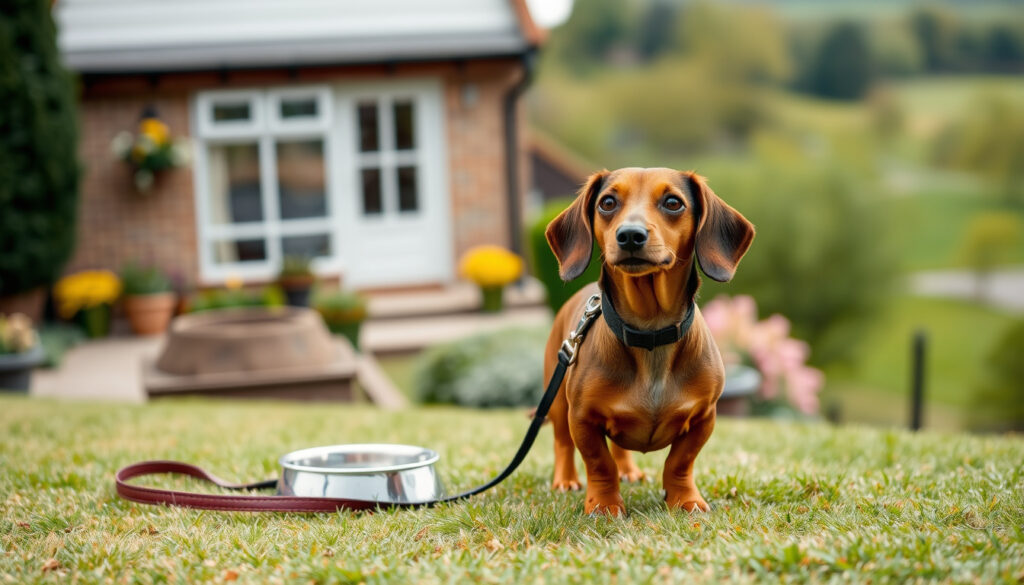
Mini Dachshund Guide: Temperament, Costs & Care (UK)
You’ve likely seen them online—tiny, long-bodied pups with a bark that doesn’t match their size—and wondered if a Miniature Dachshund is the right fit for your home. Beyond their undeniable cuteness, UK owners face a mix of devoted companionship, stubborn streaks, and specific health costs that go far beyond the initial price.
Average weight: 4.5–5 kg (10–11 lbs) ·
Height at shoulder: 13–18 cm (5–7 in) ·
Typical lifespan: 12–16 years ·
Price range (UK): £1,000–£2,500 ·
Barking tendency: Very high
Quick snapshot
- IVDD (back problems) – highest risk (CompareMyVet)
- Obesity – exacerbated by back issues (Pets4Homes)
- Dental disease – small mouth ((CompareMyVet))
- Patellar luxation ((CompareMyVet))
- Separation anxiety – not ideal for long workdays (Pets4Homes)
- Burrowing instinct – loves blankets and laps ((Pets4Homes))
- Exercise needs: 30–45 mins daily (PDSA)
- Good watchdog – barks at noises (Waggel)
The PDSA describes Miniature Dachshunds as “loyal, alert, and stubborn—a combination that means they bond intensely with their family but require a patient owner who won’t be out-negotiated.”
— PDSA (UK vet charity)
Six key facts define the breed, one pattern: a small package with big demands.
| Attribute | Detail |
|---|---|
| Official name | Miniature Dachshund (Smooth/Long/Wire Haired) |
| AKC group | Hound |
| Country of origin | Germany |
| Exercise needs | 30–45 minutes daily |
| Grooming | Low (smooth) to moderate (long) |
| Hypoallergenic | No |
Are mini Dachshunds a good pet?
When you strip away the cute factor, the Miniature Dachshund’s suitability as a pet hinges on a few non-negotiable traits. The PDSA (UK vet charity) describes the breed as loyal, alert, and stubborn—a combination that means they bond intensely with their family but require a patient owner who won’t be out-negotiated. They’re excellent watchdogs, but that alertness translates to a very high barking tendency, which neighbours in flats or semi-detached homes may not appreciate.
What complicates the “good pet” question is the size-to-attitude ratio. A Miniature Dachshund that doesn’t respect its owner can become a bossy, noisy tyrant. Yet, with consistent training and positive reinforcement, as Waggel (pet insurance provider) recommends, they’re affectionate and portable companions. The real question isn’t whether they’re good pets—it’s whether your lifestyle can accommodate a dog with such a strong personality.
Upsides
- Fiercely loyal and affectionate with family
- Portable size for travel and living spaces
- Excellent watchdog with alert nature
- Long lifespan of 12–16 years
Downsides
- Very high barking tendency (breed trait)
- Stubborn streak makes training challenging
- Prone to IVDD and expensive spinal issues
- Separation anxiety – not ideal for long workdays
The trade-off: you get a fiercely loyal, portable companion in exchange for a dog that will test your training consistency and your patience with its barking.
What are the cons of a Miniature Dachshund?
The most significant downside isn’t temperament—it’s health. The breed’s long back makes them highly prone to Intervertebral Disc Disease (IVDD), a spinal condition that can cause pain, paralysis, and require surgery costing £2,000–£5,000 in the UK, according to CompareMyVet (UK vet price comparison). This isn’t a remote possibility; it’s a breed-specific risk that every owner must plan for financially and practically.
Behaviourally, the cons are just as clear. Mini Dachshunds are prone to separation anxiety due to their strong bonding, barking excessively when left alone. They also have a stubborn streak that makes housebreaking a test of will. As UKPets (pet health resource) notes, their small size doesn’t mean low maintenance—they need mental stimulation to prevent destructive boredom.
The pattern is clear: the breed’s worst traits (barking, anxiety, stubbornness) are the flip side of its best traits (loyalty, alertness, determination).
Are girl or boy Dachshunds nicer?
There’s no scientific consensus that one gender is “nicer”—the difference is in temperament nuance, not friendliness. Female Miniature Dachshunds are often described as more independent and sometimes stubborn, while males tend to be more affectionate and eager to please, though they may be more prone to marking territory indoors. However, PDSA (UK vet charity) emphasises that individual personality and socialisation play a far larger role than gender in determining temperament. A well-socialised dog of either sex is a lovely companion; a poorly socialised one will develop behaviour problems regardless of gender.
For UK owners deciding between male and female, the real consideration is your experience with the breed. First-time owners might find the slightly more affectionate nature of a male easier to bond with, while those wanting a slightly more independent dog might prefer a female. Ultimately, the choice should be based on the individual puppy’s behaviour and your ability to commit to training.
Waggel recommends “positive reinforcement, small treats or cheerful praise, and brief training sessions” for training Miniature Dachshunds, emphasising consistency over confrontation.
— Waggel (pet insurance provider)
How much should you pay for a Miniature Dachshund?
Buying a Miniature Dachshund in the UK typically costs between £1,000 and £2,500 from a reputable breeder, though Pets4Homes (UK pet marketplace) suggests well-bred Kennel Club registered puppies can reach £1,450. This price varies based on coat type, colour, and the breeder’s reputation for health testing. However, the purchase price is just the entry fee; UKPets (pet health resource) estimates initial costs for supplies, vet checks, and setup at £1,018 to £1,530, with ongoing yearly costs of £993 to £1,320 covering food, insurance, and routine care.
Because of the breed’s high risk of IVDD, insurance is not optional—it’s a necessity. A spinal issue can cost £2,000 to £5,000 for surgery alone, making comprehensive coverage essential for any UK owner. For those considering a rescue, fees are generally lower, but the savings can be offset by potential health issues from less scrupulous breeding practices.
The pattern: the initial outlay is significant, but the ongoing health costs for a breed with known spinal issues can dwarf the purchase price by 2–4 times in a single emergency.
How much is a Miniature Dachshund in the UK?
In the UK, prices vary widely based on location and demand. The £1,000–£2,500 range from reputable breeders reflects higher costs in London and the South East, while Scotland and Northern Ireland may see slightly lower prices. Pets4Homes (UK pet marketplace) notes that while some listings may advertise puppies for £600, these are rarely from licensed breeders and often come with higher health risks. A rescue Mini Dachshund via breed-specific charities can cost £300–£700, including spaying and initial vaccinations.
The trade-off: paying more upfront to a licensed breeder with health-tested parents reduces the risk of £5,000 in spinal surgery later, but it’s not a guarantee—IVDD is a genetic lottery, not just a breeder’s fault.
What is the lifespan of a mini dachshund?
A well-cared-for Miniature Dachshund typically lives 12–16 years, with the PDSA (UK vet charity) noting an average lifespan of over 12 years. Waggel (pet insurance provider) gives a slightly narrower band of 12–16 years. This longevity is both a blessing and a responsibility—a Mini Dachshund is a 12-16 year commitment that will likely outlive your current job, home, and possibly your patience during the barking phases. The key to achieving the upper end of that range is managing their weight and protecting their back from injury.
What this means for UK owners: you’re committing to a dog that will be with you through major life changes—marriages, children, house moves, and career shifts. Their lifespan makes them a significant long-term financial and emotional commitment, not a starter pet.
Common health issues in Miniature Dachshunds
Beyond IVDD, Miniature Dachshunds are prone to a cluster of conditions that UK owners must budget for. Pets4Homes (UK pet marketplace) highlights obesity as a serious risk—their small size means an extra 500g is a significant weight gain that exacerbates back problems. Dental disease is another concern due to their long, narrow snouts, and patellar luxation (loose kneecaps) is common. For those considering the cost of care, CompareMyVet (UK vet price comparison) notes that MRI scans for spinal issues can cost £800–£1,800, adding to the financial burden.
The editorial read: a Mini Dachshund is not a cheap or easy breed to own health-wise. The initial purchase price is just the tip of the financial iceberg, and prospective owners should be prepared for high insurance premiums and potential long-term vet bills.
Do Miniature Dachshunds bark a lot?
Yes, Miniature Dachshunds bark a lot—it’s a breed trait, not a fixable behaviour. Their hunting background means they’re alert and tend to sound off at any unfamiliar noise, person, or animal. PDSA (UK vet charity) describes them as having a high barking tendency, which can be problematic in apartments or for neighbours who prefer silence. While training can reduce nuisance barking, it won’t eliminate it—this is a dog that will always announce the postman’s arrival.
For UK owners in terraced houses or flats, this is a critical consideration. The barking isn’t just a minor annoyance; it’s a primary reason people rehome Miniature Dachshunds, as owners underestimate their vocal nature. Managing this behaviour requires a combination of early socialisation, mental stimulation to prevent boredom, and a firm “quiet” command.
The trade-off: you get a world-class watchdog, but only if you can handle the constant commentary on every passing squirrel, car, and leaf.
Excessive barking isn’t just a nuisance—it’s a sign of an under-stimulated or anxious Dachshund. A tired, content dog barks less; persistent barking is your cue to increase exercise and mental enrichment.
Are Mini Dachshunds yappy?
“Yappy” undersells it—they have a deep, surprisingly loud bark for their size, which can be startling. This isn’t the high-pitched yap of a Chihuahua; it’s a proper hound “bay” that carries across a room. Pets4Homes (UK pet marketplace) notes that while training can manage the frequency, the habit of alerting you to every sound is deeply ingrained. The issue is compounded by their stubbornness—they may bark and then refuse to stop even when you’re trying to correct them.
Living with a vocal Mini Dachshund requires a thick skin and consistent training. The good news is that this behaviour can be curtailed with positive reinforcement and rewarding quiet, as Waggel (pet insurance provider) suggests. The bad news: it will take weeks or months of consistent effort, and even then, they’ll still bark when excited or alarmed.
Can Miniature Dachshunds be left alone?
Leaving a Miniature Dachshund alone for long periods is a recipe for distress—theirs and your furniture’s. Due to their strong bonding with owners, they’re prone to separation anxiety, which Pets4Homes (UK pet marketplace) flags as a major cause of destructive behaviour and excessive barking. While some can manage 4–6 hours, this is the absolute maximum. UK owners who work full-time outside the home will need a dog walker or doggy daycare to prevent the dog from becoming distressed.
Training is essential to building independence: start with short absences, provide mental enrichment like puzzle feeders, and crate train to give them a safe haven. Waggel (pet insurance provider) recommends positive reinforcement for calm behaviour, but this takes time and patience. For a UK professional, this means a significant additional cost—a dog walker can easily cost £10–£15 per hour in cities like London or Manchester.
Why this matters: separation anxiety is the leading cause of failed adoptions for this breed. If you’re out of the house for more than 4 hours regularly, it’s not fair to the dog to bring one home.
Crate training is your best defence against separation anxiety. Start with 15-minute sessions, build gradually, and always leave a safe chew toy to create a positive association with alone time.
How to prevent separation anxiety in Mini Dachshunds
Prevention starts with a routine that makes your absence less disruptive. Practice being out of sight for short stints, entering and leaving with calm energy, and always offering a high-value treat or puzzle toy when you leave. Waggel (pet insurance provider) suggests increasing alone time gradually—never going from 0 to 8 hours in a week. For UK owners in the persistence-required climate, this might mean running errands more often during the initial weeks to keep absences short.
The other critical piece is exercise before you leave. A 30–45 minute walk to burn energy before your departure can make a significant difference in how calmly your dog settles. A tired Dachshund is a quieter Dachshund. If you have a puppy, consider taking a week off work to facilitate this training without rushing.
Why do Dachshunds like to sleep under covers?
The burrowing instinct is the answer, and it’s a problem for UK owners with a dog that wants to be a mole. This behaviour comes from their breeding as badger hunters, where they’d dig into dens for warmth and security. Pets4Homes (UK pet marketplace) notes that this is a breed-specific trait, not an accident. Sleeping under covers provides warmth, reduces anxiety, and envelops them in your scent—a multi-sensory comfort blanket.
For UK households, this means accepting that the bed is no longer exclusively yours. If you want your Mini Dachshund to sleep in your bed, prepare for a dog that burrows under the duvet and pushes you to the edge. If not, a cosy cave bed with high sides can replicate this burrowing need safely. The health benefit is also worth noting: for a dog prone to IVDD, a safe sleeping spot on a firm, supportive surface can help protect their spine.
The pattern: their burrowing isn’t just cute—it’s a need rooted in their genetic makeup. Providing a safe outlet for this instinct is part of responsible ownership.
Do Miniature Dachshunds sleep a lot?
Yes, adult Miniature Dachshunds sleep 12–14 hours a day, and that’s normal. Puppies and senior dogs can push that to 16–18 hours. This isn’t laziness—it’s energy conservation for a hunting breed that expends bursts of activity. However, there’s a difference between a dog that sleeps all day because that’s its routine and one that’s sleeping excessively due to boredom or illness. If you notice a sudden increase in sleep, it could signal a health problem like hypothyroidism or depression.
The key for UK owners is to ensure that the waking hours are packed with mental and physical activity. Given the breed’s low exercise needs (30–45 minutes daily), a lot of that sleep happens during the day while you’re at work. This is fine, provided you’re meeting their stimulation needs when you’re home.
Do Miniature Dachshunds get cold at night?
Yes, Miniature Dachshunds get cold at night—and it’s not just a preference; it’s a physiological vulnerability. Their short coats, low body fat, and small size mean they lose heat rapidly. PDSA (UK vet charity) classifies them as a breed that needs extra warmth in cold weather. The smooth-haired varieties are especially vulnerable; long and wire coats offer slightly more protection, but still aren’t enough for a chilly UK night.
For UK owners, this means providing a warm bed, ideally with a heat pad or snugglesafe, and being mindful of draughts. That blanket burrowing isn’t just cute—it’s the dog’s way of compensating for its inability to generate enough body heat. Weighing their options, owners should consider early training to get them used to sleeping in a snug, safe space.
The trade-off: you can have a dog that sleeps under your covers for warmth, or you can provide a cave-style bed that serves the same purpose. The latter is safer for both of you.
A cave bed with a sheepskin insert isn’t just a treat—it’s a health investment. It satisfies the burrowing urge while protecting a breed that’s prone to spinal and joint issues from the dangers of jumping off high beds.
Do Miniature Dachshunds need a coat?
Yes, a UK winter demands a coat for a Mini Dachshund. Pets4Homes (UK pet marketplace) stresses the necessity of protective wear for walks in cold, wet weather. This is not a fashion statement; it’s a functional necessity. A water-resistant coat covers the back, which is the most vulnerable part of their body, protecting against both the cold and rain that could cause discomfort or hypothermia.
When dressing your Dachshund, avoid hoods or loose fabric that could snag on things. The coat fit is crucial—it should be snug but not restrictive, covering from the neck to the base of the tail. In snowy or icy conditions, the dog’s belly is 10cm from frozen ground, so the coat should have a chest flap for extra coverage. This extra layer can make walks more comfortable, ensuring you don’t skip necessary exercise due to cold weather.
Is it cruel to leave a dog outside in the winter?
Yes, it’s cruel and potentially dangerous to leave any dog outside in freezing temperatures, and it’s especially negligent for a short-haired breed like the Mini Dachshund. Pets4Homes (UK pet marketplace) is clear that a dog’s critical body temperature is at risk when left outside in winter. While they have a fur coat, it’s not designed for prolonged exposure to freezing temperatures, and their lack of body fat means they can’t maintain a safe core temperature.
If you wouldn’t sleep outside yourself in a winter coat, why expect your dog to? In the UK, freezing temperatures and wet conditions can lead to hypothermia and frostbite, which are painful and can be fatal. The practical advice is simple: your dog should live indoors as part of the family. If a dog must be outside, a heated kennel would be required, but even that is not a substitute for the companionship your dog craves.
pets4homes.co.uk, pethealthclub.com, vetpricecomparisonsite.co.uk, theinsuranceemporium.co.uk, waggel.co.uk, forthebreed.co.uk, pets4homes.co.uk
Frequently asked questions
Are Miniature Dachshunds good with children?
Yes, with early socialisation and supervision. They’re loyal and protective but can be wary of boisterous children.
What are the most common health issues in Miniature Dachshunds?
IVDD is the most serious, followed by obesity, dental disease, and patellar luxation.
How much exercise does a Miniature Dachshund need?
30–45 minutes daily, but it must be gentle—no jumping off furniture, as that’s a primary cause of IVDD.
Are Miniature Dachshunds easy to train?
They’re intelligent but stubborn, so training must be consistent and positive, and can be challenging.
What is the price of a Miniature Dachshund puppy?
Expect to pay £1,000–£2,500 from a reputable breeder; ongoing costs are higher than the average dog.
Do Mini Dachshunds like to sleep with their owners?
Very much so—it’s their burrowing instinct. They’ll seek out warm, dark spaces, which can be managed with a cave bed.
More related posts
 Paris Fashion Week 2025: Complete Guide for First-Time Attendees
 African Store Near Me – Find Markets, Hours & Products
 Basketball Hoop Buying Guide Ireland: Wall, Portable & Full Size
 How to Delete Cookies on iPhone – Safari, Chrome, Firefox Steps
 End of Ramadan 2025 – Date, Eid and Moon Sighting Guide
 Translate Romanian to English: Best Free Tools Guide
 Cast of We Live in Time – Full Cast, Crew and Key Details
 16 Stone in kg: Exact Conversion + Chart & Calculator
