German Christmas Markets 2025: Dates, Best Cities & Guide
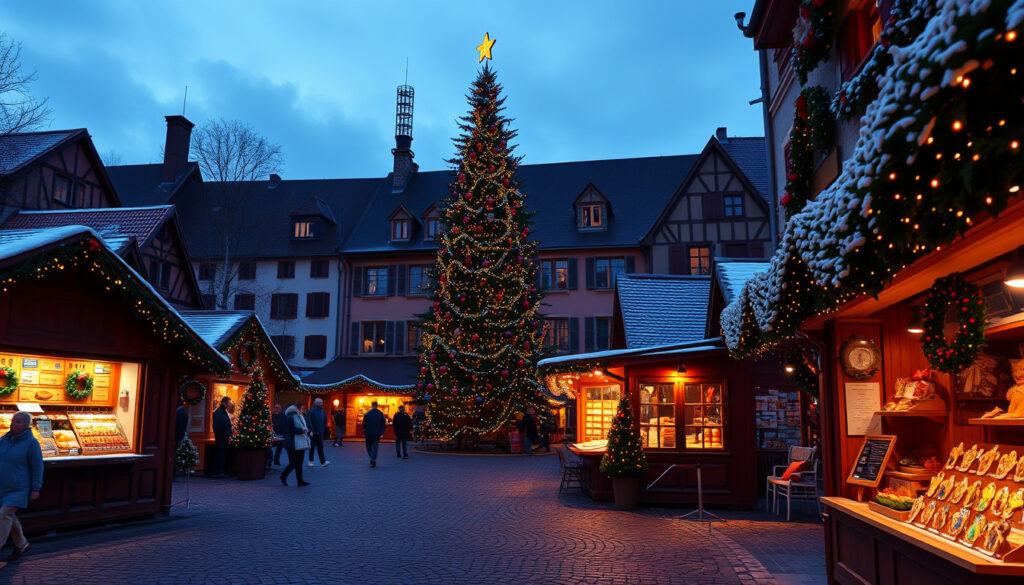
Germany’s Christmas markets hold a particular kind of magic — wooden stalls glowing with warm light, the scent of mulled wine and gingerbread drifting through crisp winter air, and centuries of tradition woven into every corner. With most markets opening between November 20 and 29 in 2025, planning now means you can catch the full season without rushing. Hamburg alone expects nearly 3 million visitors across its sprawling market circuit, a testament to how seriously Germans take their Adventsmarktdorf tradition.
Typical Start Date: Friday before 1st Advent Sunday (Nov 28, 2025) · End Date: December 24 · Markets in Major Cities: Nuremberg, Frankfurt, Baden-Württemberg · 2026 Reference Start: November 27
Quick snapshot
- Nuremberg Christkindlesmarkt documented since 1628 (Dangerous Business travel guide)
- Dresden called Germany’s ‘capital of Christmas’ during Advent (Dangerous Business travel guide)
- Cologne spreads seven main markets across the city (Helene in Between blog)
- Exact ticket pricing for premium market zones in 2025
- Whether weather patterns will shift opening dates for outdoor markets
- Visitor capacity limits still being confirmed for major venues
- Nov 28, 2025: Most markets open (pre-1st Advent)
- Dec 24, 2025: Christmas Eve closures
- Nov 27, 2026: Reference for next year
- Book accommodations by late October for best availability
- Plan regional routes to catch multiple markets per trip
- Monitor individual city websites for any schedule adjustments
| Market | 2025 Opening | 2025 Closing | Hours |
|---|---|---|---|
| Nuremberg Christkindlesmarkt | November 28 | December 24 | 10 am – 9 pm |
| Munich Marienplatz | November 24 | December 24 | 10 am – 9 pm |
| Cologne Cathedral Market | November 17 | December 23 | 11 am – 9 pm |
| Dresden Striezelmarkt | November 26 | December 24 | 10 am – 9 pm |
| Hamburg Christmas Market | November 24 | December 23 | 11 am – 9 pm |
| Frankfurt | November 25 | December 22 | Varies |
| Berlin | November 24 | December 31 | Varies |
| Düsseldorf | November 20 | December 30 | Varies |
Which city in Germany is best for Christmas markets?
Nuremberg, Dresden, and Cologne consistently emerge as the strongest starting points for first-time visitors, according to travel specialists who track these markets annually. Nuremberg draws the most international attention, while Dresden earns its “capital of Christmas” nickname through sheer density of tradition.
Nuremberg Christkindlesmarkt
Nuremberg’s Christkindlesmarkt traces documented roots back to 1628, making it one of the oldest in Germany. The 2025 edition opens November 28 at 5:30 pm with its traditional opening ceremony, running through December 24 from 10 am to 9 pm daily. Travel guides note that arriving early or visiting on weekdays helps avoid the substantial crowds that gather around its central plazas. The market’s 180-plus stalls fill the Hauptmarkt square with handcrafted ornaments, Nürnberger Lebkuchen (gingerbread), and Zwetschgenmännchen — small figures made from dried plums that serve as the region’s signature souvenir.
Frankfurt Markets
Frankfurt offers multiple distinct market locations, with the central market running November 25 through December 22. The city’s position as a major international hub makes it particularly convenient for visitors flying into Germany, and its markets reflect Frankfurt’s blend of financial district gravitas and genuine festive warmth. Hotel availability in the city tends to command premium rates during December, so booking early helps secure better options.
Southwest Germany Highlights
The Baden-Württemberg region delivers some of Germany’s most atmospheric themed markets. Esslingen’s Medieval Christmas Market (November 25 – December 22) transforms the old town into a period-appropriate wonderland, while Ludwigsburg’s Baroque Christmas Market (November 25 – December 22) showcases crafts in a palace setting that feels plucked from another era. Heidelberg extends well into January 2026 with its secondary market, offering flexibility for travelers whose schedules push past the traditional Christmas-weekend closure.
For first-time international visitors, Nuremberg and Dresden offer the most complete “classic German Christmas market” experience. Frankfurt works best for travelers already routing through its airport, while Baden-Württemberg rewards those with time to explore beyond the major hubs.
What date are German Christmas markets?
Most German Christmas markets anchor their opening to the Advent calendar, with the majority swinging open between November 20 and 29 in 2025. This timing follows the first Advent weekend, a tradition that shapes the entire German holiday calendar. A few markets reportedly open as early as November 6, though these outliers tend to be smaller regional affairs rather than the famous destination markets.
2025 Opening Dates
The earliest major market in 2025 is Cologne’s Cathedral market, which opens November 17, followed by Düsseldorf on November 20 and Aachen on November 21. Nuremberg’s Christkindlesmarkt opens November 28 — the Friday before the first Advent Sunday — with its formal opening ceremony at 5:30 pm. The majority of markets across Munich, Hamburg, Stuttgart, and Dresden follow between November 24 and 26.
Duration and Closing
Most markets close on Christmas Eve (December 24), with many operating daily through that date. However, several markets extend beyond the traditional window: Düsseldorf runs through December 30, Berlin through December 31, and Cologne’s Heinzels Wintermärchen extends to January 4, 2026. This makes the Rhineland and Berlin particularly useful for travelers whose trips extend into the new year.
City-Specific Schedules
Hours vary notably by city and day of week. Stuttgart’s market (November 26 – December 23) operates 11 am to 9 pm Sunday through Thursday, extending to 10 pm on Fridays and Saturdays. Hamburg runs 11 am to 9 pm daily. Kassel keeps earlier hours, closing at 8 pm, while Rothenburg ob der Tauber shuts down at 7 or 8 pm depending on the day. These variations matter when planning multi-city itineraries — a two-hour gap between markets in different cities can mean the difference between catching the full experience or finding locked gates.
The optimal visit window falls November 25 through December 22, when nearly all major markets operate simultaneously. Arriving before November 28 catches the early openers; staying past December 24 means focusing on markets like Berlin, Düsseldorf, or Cologne that stay open longer.
What is the most beautiful Christmas market in Germany 2025?
Beauty in German Christmas markets comes in several forms: architectural setting, lighting design, crowd atmosphere, and the visual coherence of the market itself. Rankings vary by what travelers prioritize, but certain markets consistently appear at the top of visual assessments.
Top Contenders
Dresden’s Striezelmarkt earns its “capital of Christmas” designation partly through sheer visual drama — the market spills across historic squares with the Frauenkirche as backdrop. Cologne’s Cathedral market offers an incomparable setting beneath the gothic spires, creating photographs that define the holiday season aesthetic. Munich’s Marienplatz centers on a towering Christmas tree and the distinctive Glockenspiel, while the city’s sendling market adds variety for those willing to explore.
Visual Highlights
Hamburg’s market near the Rathaus (city hall) transforms a grand civic space into a festival ground, while the smaller Sternschanze neighborhood market offers a more intimate, locally-oriented feel. Heidelberg’s market clusters around the Altes Hallenbad, offering a unique indoor-outdoor experience that extends through January 1, 2026. Rothenburg ob der Tauber delivers medieval-period authenticity that larger cities can’t match, with the walled town’s preserved architecture providing natural stage dressing.
2025 Updates
Several markets reportedly expanded their lighting installations for 2025, responding to growing competition for visitor attention. Germany’s Christmas market operators have increasingly invested in sustainable LED systems, which create brighter, more consistent illumination while reducing operational costs. Details on specific 2025 enhancements remain limited as most market websites publish only basic schedule information.
What is the most authentic German Christmas market?
Authenticity in Christmas markets means different things depending on what you value: traditional crafts, regional food specialties, minimal tourism commercialization, or historical continuity with practices stretching back centuries. Several markets balance these elements particularly well.
Traditional Markets
Nuremberg’s Christkindlesmarkt maintains the strongest documented connection to historical tradition, with verifiable mentions dating to 1628. The market’s regulations require that craftspeople produce their goods on-site or within the region, keeping quality high and commercial mass-production low. Dresden’s Striezelmarkt similarly prioritizes regional vendors, and the city’s Stollen (fruit bread) tradition gives the market a specific culinary identity tied directly to Saxony.
Authenticity Factors
The key markers of authenticity include: vendor ownership (local craftspeople vs. imported goods), architectural context (historic buildings vs. parking lots), food specialization (regional recipes vs. generic “Christmas market” fare), and crowd composition (local visitors vs. purely tourist). Markets in smaller cities like Rothenburg ob der Tauber, Esslingen, and Goslar score highly on these metrics because their smaller scale naturally limits commercialization.
Hidden Gems
Ludwigsburg’s Baroque Christmas Market uses its palace setting to create an atmosphere that feels genuinely removed from the modern world. Goslar’s market (November 26 – December 30) runs longer than most and serves a UNESCO World Heritage old town that’s stunning in its medieval preservation. Regensburg offers a riverfront location with relatively low international tourist traffic compared to Nuremberg or Munich, making it practical for visitors seeking a genuine local atmosphere.
The most authentic markets often require more travel effort or lack the English-language services that international visitors depend on. Travelers prioritizing convenience should consider Nuremberg or Munich; those seeking genuine local character may find smaller markets more rewarding despite logistical challenges.
Where is the best place to fly into Germany for Christmas markets?
Your arrival airport shapes your entire Christmas market itinerary. Germany’s major hubs each offer distinct advantages depending on which markets you’re targeting and whether you plan to rent a car or rely on trains.
Major Airports
Frankfurt Airport (FRA) serves as Germany’s largest international hub and offers the most direct flight options from North America. The city hosts multiple Christmas markets within easy reach of the airport terminals, meaning you could potentially begin your market experience within hours of landing. Train connections from Frankfurt reach Nuremberg in about two hours and Munich in roughly four hours, making it workable as a base for a southern Germany circuit.
Proximity to Top Markets
Munich Airport (MUC) provides excellent access to Munich’s markets plus convenient train links to Nuremberg (roughly 1.5 hours) and Stuttgart (about 2 hours). Frankfurt works well for eastern and western circuits, while Hamburg Airport (HAM) serves northern markets with direct train connections to Lübeck and Bremen for visitors willing to venture beyond the city itself. Berlin’s airports (BER) connect well to Dresden (roughly two hours) for those prioritizing Saxony’s markets.
Travel Tips
Booking flights eight to twelve weeks in advance typically yields the best rates for December travel, according to fare analysts who track seasonal pricing patterns. Accommodations in Nuremberg, Dresden, and Cologne command significant premiums during December, so travelers on tighter budgets should consider day-trip logistics from more affordable nearby cities or booking properties well outside the city centers where rates remain more reasonable.
What we know versus what’s still uncertain
Confirmed
- Most markets open November 20-29, 2025
- Nuremberg opens November 28 with verified historical documentation since 1628
- Cologne runs seven distinct markets across the city
- Hamburg expects nearly 3 million visitors in 2025
- Dresden, Nuremberg, and Cologne recommended as top entry points for U.S. visitors
Rumors and gaps
- Exact 2025 ticket pricing for premium zones
- Specific vendor lists and special items for individual markets
- Whether weather will shift any opening dates
- Capacity limits still being confirmed for major venues
- Visitor numbers for markets other than Hamburg
“Nuremberg, Dresden, and Cologne are great starting points for first-time visitors because they balance accessibility with strong festive atmosphere. The markets are well-organized, English-friendly at key points, and the cities have enough tourism infrastructure to make navigation straightforward.”
“The best time to visit German Christmas markets is November 25 through December 22, when nearly all major markets are open and the crowds haven’t yet hit their peak holiday-week intensity.”
Related reading: Badminton Horse Trials 2025: Dates, Results & How to Watch · When is St George’s Day 2025? Date Moved to 28 April
ginaonaplane.com, heleneinbetween.com, christmasmarketsgermany.com, happytowander.com, jetpacglobal.com, community.ricksteves.com
While Nuremberg and Frankfurt top many lists, the Cologne Christmas Market 2025 guide captivates millions with its seven distinct markets across the city’s historic districts.
Frequently asked questions
German Christmas markets 2025 — do I need tickets?
Most German Christmas markets are free to enter. Some specialty themed sections or enclosed market areas may charge small admission fees, but the main public markets in city centers operate without entry charges. Check individual market websites for specific premium zone information.
When do Christmas markets start in Germany 2026?
The 2026 season is expected to follow similar patterns, with most markets opening around November 27 (the Friday before the first Advent Sunday). Specific 2026 dates won’t be confirmed until closer to the fall, but the Advent calendar anchor point provides a reliable estimate.
What’s the biggest Christmas market in Germany?
Hamburg’s Christmas market expects nearly 3 million visitors during the 2025 season, making it one of the largest by attendance. Nuremberg’s Christkindlesmarkt competes in international fame despite operating from a smaller footprint, while Cologne’s seven markets combined create significant scale across the city.
Best German Christmas markets 2025 for first-time visitors?
Travel specialists consistently recommend Nuremberg, Dresden, and Cologne as the top starting points for first-time international visitors. These markets offer the strongest combination of historical authenticity, visual drama, and tourism infrastructure that accommodates English-speaking visitors.
German Christmas markets 2025 near me?
Markets operate in cities of every size across Germany, from major hubs like Munich and Hamburg down to towns like Rothenburg ob der Tauber and Esslingen. Regional planning tools from sites like christmasmarketsgermany.com help identify options based on specific travel routes.
Biggest Christmas market in Germany by size?
By physical footprint, several markets compete for largest designation. Munich’s Christkindlmarkt spans multiple locations including Marienplatz, Sendling, and others. Cologne’s distributed approach with seven markets creates the largest combined area. By visitor numbers, Hamburg leads with its nearly 3 million annual attendees.
German Christmas markets 2026 — should I plan ahead?
For 2026, start checking market websites in September or October for confirmed dates. Accommodations book quickly for December travel, and rental cars become scarce during the holiday season. Flights from North America typically offer better availability and pricing eight to twelve weeks before departure.
For travelers from the United States or United Kingdom planning their first German Christmas market experience, the choice between Nuremberg, Dresden, and Cologne is clear: Nuremberg delivers historical weight with its 1628 roots and manageable city layout, Dresden offers Saxony’s “capital of Christmas” atmosphere with stunning architecture, and Cologne provides the dramatic cathedral backdrop plus seven markets worth of variety. Visitors arriving through Frankfurt or Munich gain the most flexibility to reach multiple markets by train before the Christmas Eve closures force most stalls to shut down on December 24.
More related posts
 Dark Side of the Moon – History, Facts and Myths
 Compare the Market NI – Best Alternatives for Energy Broadband Insurance
 Five Nights at Freddy’s – Complete Franchise Guide
 Audrey Hobert: Age, Siblings, Family, and Career Facts
 Jack and the Beanstalk: Story, Moral, Origins & Analysis
 Convert PDF to Word Free: Best Free Converters Compared
 Badminton Horse Trials 2025: Dates, Results, How to Watch
 M and S Near Me – Find Stores, Hours and Cafes Nearby
