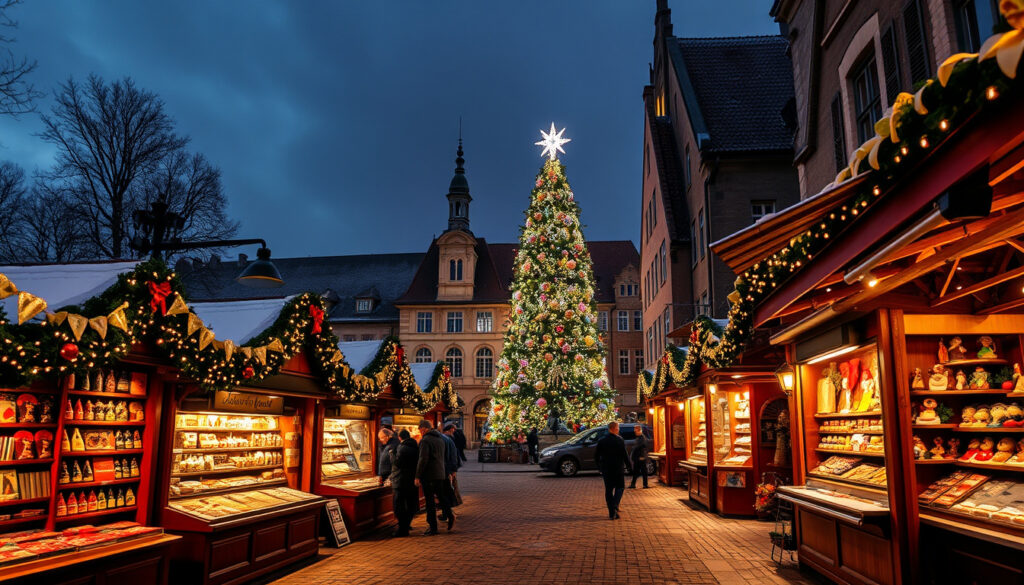
German Christmas Markets 2025: Dates, Best Cities & Guide
Few traditions pull travelers across Europe quite like German Christmas markets. The smell of roasted almonds, the glow of hand-carved wooden ornaments, the sound of choirs in medieval squares — it is a ritual that dates back centuries and still draws millions every winter.
Season Start: Late November 2025 ·
Iconic Market: Nuremberg Christkindlesmarkt ·
Longest Running: Braunschweig — 500 years ·
Berlin Window: Nov 27 – Dec 30
Quick snapshot
- Nuremberg opens November 28, 2025 (Nuremberg City Marketing)
- Market documented since 1628 — Germany’s oldest (Nuremberg City Marketing)
- No official 2025 dates yet for Bonn or Augsburg (Helene in Between)
- Ticket availability details not published across most markets (Helene in Between)
- Cologne kicks off earliest — November 17, 2025 (Helene in Between)
- Most markets follow by November 24–28 (Helene in Between)
- Book accommodation by October — prices spike in December
- Airport options: Frankfurt (near Nuremberg), Munich, Berlin-Tegel
| Market | 2025 Dates | Notes |
|---|---|---|
| Nuremberg Christkindlesmarkt | Nov 28 – Dec 24 | 1628 origin, most famous market |
| Berlin (Gendarmenmarkt) | Nov 27 – Dec 30 | Longest duration; central location |
| Cologne by Cathedral | Nov 17 – Dec 23 | Earliest opener; 150+ stalls |
| Hamburg City Hall | Nov 24 – Dec 23 | ~3 million visitors annually |
| Munich Marienplatz | Nov 24 – Dec 24 | Multiple themed markets citywide |
| Dresden Striezelmarkt | Nov 26 – Dec 24 | Germany’s “capital of Christmas” |
| Aachen | Nov 21 – Dec 23 | Known for exceptional decorations |
| Heidelberg | Nov 24 – Dec 22 | Second market runs to Jan 1, 2026 |
Which city in Germany is best for Christmas markets?
The honest answer depends on what you value most: tradition, atmosphere, variety, or sheer duration. Three cities consistently top the rankings based on verified visitor data and tourism board profiles.
Nuremberg
Nuremberg Christkindlesmarkt earns its reputation. The official Nuremberg City Marketing office confirms the market opened as early as 1628 — a paper trail that makes it Germany’s most historically documented Christmas market. The elected Christ Child (a local teenage girl) opens the market with a ceremonial prologue at 5:30 pm on November 28, and the event runs daily 10am–9pm through December 24. Parents appreciate the dedicated Children’s Market with hands-on crafts and carousel rides, while food lovers seek out theLebkuchler (gingerbread) stalls and Schemberlain (toy) market section.
Berlin
Berlin wins on logistics for extended trips. Multiple markets operate across the city, with Gendarmenmarkt — framed by the German Cathedral and French Cathedral — standing out for its gourmet food stalls and upscale atmosphere. According to travel blogger Helene in Between, the Berlin Christmas market runs from November 27 through December 30, making it the longest of the major markets. That five-week window lets travelers visit without the Christmas Eve pressure.
Braunschweig
Braunschweig (Brunswick) holds a special place in the canon: the European Best Destinations organization calls it one of Germany’s most attractive and atmospheric markets, citing a 500-year unbroken tradition that predates Nuremberg’s documentation. The market’s medieval old town setting and competitive stall designs draw visitors specifically for the ambiance rather than the shopping.
Nuremberg delivers history and scale; Berlin offers flexibility; Braunschweig rewards travelers who want to escape the crowds. All three are worth visiting if time allows.
What date are German Christmas markets?
Most German Christmas markets follow a predictable calendar, but regional differences exist — and they are backed by more than speculation.
2025 Opening Dates
North Rhine-Westphalia consistently opens first. Cologne by the Cathedral starts November 17, 2025, making it the earliest of the major markets, according to travel blogger Helene in Between. Aachen follows five days later (November 21), while most Bavarian and Saxon markets — Nuremberg, Munich, Dresden — begin the last full week of November.
Major City Calendars
The table below shows how each city’s lights-on date maps across the November–December window, revealing a clear west-first pattern.
| City | Opens | Closes | Duration |
|---|---|---|---|
| Cologne | Nov 17 | Dec 23 | 36 days |
| Aachen | Nov 21 | Dec 23 | 32 days |
| Hamburg | Nov 24 | Dec 23 | 29 days |
| Munich | Nov 24 | Dec 24 | 30 days |
| Heidelberg | Nov 24 | Dec 22 | 28 days |
| Dresden | Nov 26 | Dec 24 | 28 days |
| Nuremberg | Nov 28 | Dec 24 | 26 days |
| Berlin | Nov 27 | Dec 30 | 33 days |
The pattern holds across years: markets in western Germany open earliest, while Bavaria and Saxony wait until the Friday before the first Sunday of Advent. That timing puts Nuremberg’s 2025 start on November 28, confirmed by the official Nuremberg market brochure.
Which is the best Christmas market in Germany?
Ranking markets as “best” means agreeing on criteria. Three markets separate themselves by different measures.
Nuremberg Christkindlesmarkt
The Dangerous Business travel blog calls Nuremberg “arguably Germany’s most famous Christmas market” — a claim the city’s own marketing office reinforces with its 1628 documentation and the Christ Child opening ceremony. TheLebkuchler (gingerbread) and Schemberlain (toy) sections are world-renowned. For families, the Children’s Market offers hands-on crafts that most other markets skip.
“The probably most well known German Christmas market is the Christkindlesmarkt in Nuremberg. There is a written record of it as early as 1628.”
— Nuremberg City Marketing Office
Other Top Contenders
Munich offers unmatched variety — Happy to Wander notes the city has “countless diverse markets on offer,” from the main Marienplatz tree to medieval-themed villages on the outskirts. Dresden earns the “capital of Christmas” nickname through sheer density of holiday spirit, according to Dangerous Business.
What is the most beautiful Christmas market in Germany 2025?
Beauty is subjective, but three markets consistently appear in photo essays and travel awards for visual impact.
Atmospheric Picks
Braunschweig earns specific praise. The travel blog Helene in Between calls it “one of the best decorated and loveliest Christmas markets in Germany,” while the European Best Destinations organization highlights its competitive stall designs. The medieval old town setting adds architectural depth that urban plaza markets cannot match.
Visual Highlights
Aachen’s market draws photographers for its synchronization of lights, architecture, and ornament density. Helene in Between specifically notes the market’s decorations as exceptional, while Dangerous Business highlights the cathedral backdrop. Heidelberg’s two-market setup — the main market ending December 22 and a second running through January 1, 2026 — extends the visual season for travelers visiting southern Germany.
Photographers and atmosphere-seekers get the most visual return at Braunschweig, where competitive stall designs and a medieval setting create depth that larger urban markets rarely match.
What is the most authentic German Christmas market?
Authenticity in Christmas markets usually means two things: age of tradition and ratio of handcrafted to commercial goods.
Traditional Features
Nuremberg and Braunschweig share the longest documented traditions. Nuremberg’s market dates to 1628 with verifiable city records; Braunschweig claims 500 years of unbroken operation, according to European Best Destinations. Both maintain the Christ Child opening ceremony tradition that distinguishes German markets from commercial imitations elsewhere.
Handcrafted Ornaments
Stuttgart’s market dates to the 1600s, making it “one of Europe’s oldest,” according to Dangerous Business. Frankfurt’s market, concentrated around the Römerberg, emphasizes handcrafted ornaments over mass-produced goods, per Christmas Markets Germany. The Esslingen medieval market (November 25–December 22) goes furthest in authenticity by staging the entire event in period costume with candlelight-only lighting.
Market Comparison at a Glance
Eight markets, eight different trade-offs. The table below benchmarks the four most-searched cities against criteria that matter for trip planning.
| Market | Tradition Depth | Atmosphere | Family Fit | Duration | Closing Date |
|---|---|---|---|---|---|
| Nuremberg | 1628 — oldest verified | Historic, large scale | Children’s Market | 26 days | Dec 24 |
| Berlin Gendarmenmarkt | Modern upscale | Gourmet, elegant | Moderate | 33 days | Dec 30 |
| Cologne | Established | Cathedral backdrop | High (150+ stalls) | 36 days | Dec 23 |
| Munich | Varied, citywide | Multiple themes | Excellent | 30 days | Dec 24 |
| Dresden | “Capital of Christmas” | Historic, rich | Good | 28 days | Dec 24 |
| Hamburg | City Hall tradition | Urban, ~3M visitors | Moderate | 29 days | Dec 23 |
| Aachen | Early opener | Best decorated | Good | 32 days | Dec 23 |
| Braunschweig | 500 years unbroken | Most atmospheric | Good | Est. 28 days | Dec 23 |
The implication: Nuremberg wins for history seekers; Berlin for flexible itineraries; Cologne for families; Braunschweig for atmosphere chasers.
Getting There: Airports and Access Points
Most visitors fly into one of Germany’s four major international hubs and connect by train. Planning your arrival around the nearest market saves both time and transit costs.
- Frankfurt Airport (FRA) — closest to Nuremberg (≈2 hours by ICE train). Also serves the Frankfurt Christmas market directly.
- Munich Airport (MUC) — lands you in the heart of Munich’s market cluster, with direct S-Bahn connection to Marienplatz.
- Berlin Brandenburg (BER) — connects to Berlin’s longest-running market and serves as a hub for onward train travel to Dresden.
- Hamburg Airport (HAM) — smaller but convenient for Hamburg City Hall market, avoiding Berlin/Munich congestion.
Travelers flying into Frankfurt and heading to Nuremberg who wait until December will pay significantly more for both train fares and accommodation — advance booking locks in lower rates before the peak season rush.
Regional Variations Worth Knowing
Geography shapes the Christmas market calendar in ways that surprise first-time visitors.
- North Rhine-Westphalia (Cologne, Aachen, Düsseldorf): Markets here consistently open earlier — November 17–21 — than the rest of Germany. Happy to Wander attributes this to regional tradition rather than policy.
- Bavaria (Nuremberg, Munich, Regensburg): Markets wait for the traditional Friday-before-Advent timing, starting November 24–28 and closing Christmas Eve.
- Saxony (Dresden, Leipzig): The “capital of Christmas” nickname applies to Dresden specifically, with markets emphasizing handcraft traditions and local woodcarving.
What the Experts Say
“Call me biased, but Munich is still my favourite city for Christmas markets because of the countless diverse markets that they have on offer.”
— Happy to Wander (travel blogger)
“Aachen’s Christmas market is one of the best decorated and loveliest Christmas markets in Germany.”
— Helene in Between (travel blogger)
Related reading: Badminton Horse Trials 2025 dates · End of Ramadan 2025
intothebloom.com, adventuroustastes.com, christmasmarketsgermany.com, eatsleepbreathetravel.com, thetwirlingtraveler.nl
Cities such as Nuremberg, Berlin, and Cologne showcase Germany’s festive highlights, where the Cologne Christmas Market 2025 draws millions to its scattered historic venues each winter.
Frequently asked questions
When do Christmas markets start in Germany 2025?
Cologne leads off on November 17, 2025. Most other major markets — including Nuremberg, Munich, Hamburg, and Heidelberg — open November 24–28. Aachen starts November 21.
Are there German Christmas markets in the USA?
Yes, but they are approximations rather than authentic equivalents. Several cities with large German-American communities (Chicago, Cincinnati, Milwaukee) host seasonal markets inspired by German traditions. None match the 500-year documentation or scale of Nuremberg or Braunschweig.
How to get tickets for German Christmas markets 2025?
Most German Christmas markets are free to enter. A few — notably the Nuremberg Children’s Market rides and some specialty markets in Munich — charge per ride or entry. Ticket information for specific markets has not been widely published as of mid-2025; check the official city tourism websites closer to opening dates.
What airports serve the top Christmas markets?
Frankfurt (FRA) for Nuremberg and Frankfurt markets; Munich (MUC) for Munich markets; Berlin Brandenburg (BER) for Berlin and onward to Dresden; Hamburg (HAM) for Hamburg City Hall market.
How do German Christmas markets compare to other European markets?
Germany hosts the largest and oldest continuous Christmas market traditions in Europe. Strasbourg (France) and Vienna (Austria) offer competing markets, but Nuremberg’s documented 1628 origin and Braunschweig’s 500-year tradition give Germany a historical edge that other countries cannot match.
What is the best time to visit German Christmas markets?
November 28–December 10 offers the best balance: markets at full operation, crowds manageable on weekdays, accommodation rates lower than the December 15–24 peak. Weekend visits to Nuremberg see significantly higher attendance, per Andrew & Kait travel guide.
Can I visit multiple markets in one trip?
Yes, and Germany is designed for it. Frankfurt–Nuremberg (2h by ICE), Berlin–Dresden (2h by train), Cologne–Aachen (1h by regional train) make multi-market itineraries practical. A five-day trip covering Nuremberg, Frankfurt, and Cologne is a standard recommendation for first-time visitors.
More related posts
 London to New York – Flight Times Distance and Airlines
 Cast of Flowers in the Attic The Origin – Actors and Their Roles
 Mini Dachshund Guide: Temperament, Costs & Care (UK)
 Cheese and Onion Pasty Recipe: Step-by-Step Guide
 Car Wash Near Me in Ireland: Chains, Prices & Options
 The Kissing Booth 3 Ending Explained: Are Elle and Noah Together
 Royal Enfield Interceptor 650 – Price, Specs and Full Guide
 I Fought the Law ITV – True Story, Cast, Episodes and Viewing Guide
