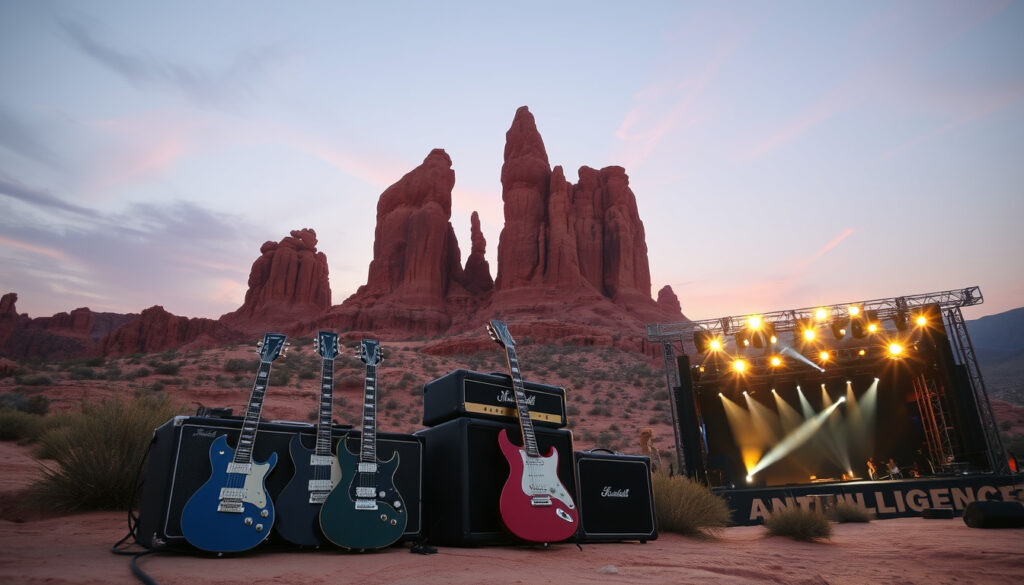
Queens of the Stone Age: Members, Songs, History & Tour
Few bands have reinvented themselves as many times as Queens of the Stone Age without losing their signature sound. From Josh Homme’s garage-rock experiments to stadium-ready anthems, the band has cycled through some of rock’s most recognizable names—Dave Grohl, Nick Oliveri, and countless others—while building a catalog that still fills venues today. Now, nearly three decades after forming in Seattle, QOTSA is about to hit the road in a major way.
Formed: 1996 · Origin: Seattle · Genre: Stoner rock · Key collaboration: Dave Grohl · Upcoming tour: 2026–27
Quick snapshot
- Formed in 1996 in Seattle (Music Festival Wizard)
- Josh Homme: founder and only constant member (Music Festival Wizard)
- Lineup stable since 2013 (Music Festival Wizard)
- Exact reasons for Nick Oliveri’s firing
- Specific details of Josh Homme’s reported health issues
- Spring 2026 Catacombs Tour with limited West Coast dates (Vice)
- Direct support on Foo Fighters Take Cover Tour (American Songwriter)
| Fact | Detail |
|---|---|
| Formed | 1996, Seattle |
| Founder | Josh Homme |
| Notable ex-member | Dave Grohl |
| Genre | Rock/Stoner rock |
| Key album | Songs for the Deaf |
| Current lineup stable since | 2013 |
Why was Dave Grohl in Queens of the Stone Age?
The story of Dave Grohl joining Queens of the Stone Age reads like a rock-and-roll crossover that felt almost inevitable. After Nirvana disbanded following Kurt Cobain’s death in 1994, Grohl launched Foo Fighters and built it into one of the world’s biggest bands. But his relationship with Josh Homme predated all of that—Homme had toured with Scream, Grohl’s pre-Nirvana project. When Grohl was looking for a creative outlet beyond Foo Fighters’ more polished productions, Homme offered him a spot.
Grohl joined QOTSA for the recording and touring cycle supporting Songs for the Deaf (2002), providing drums while also contributing vocals and guitar parts. His involvement gave the album an explosive energy that helped it reach a wider audience. Foo Fighters’ frontman brought credibility and a built-in fanbase to a band still carving out its mainstream identity.
When was Dave Grohl in Queens of the Stone Age?
Dave Grohl’s tenure with QOTSA centered on the Songs for the Deaf era—roughly 2002 to 2003. He recorded the album with the band and then toured extensively behind it, including a memorable performance at the 2003 MTV Video Music Awards where the two bands crossed paths on stage. Grohl left to focus on Foo Fighters’ One by One album, but his fingerprints remain all over that particular chapter of QOTSA’s history.
What did Dave Grohl do in Queens of the Stone Age?
Grohl served primarily as the drummer during his QOTSA stint, allowing Homme to focus on vocals and guitar. But he wasn’t just sitting in the back—he contributed backing vocals, additional guitar parts, and brought a level of intensity to the live shows that translated directly to record. His drumming on tracks like “Hangin’ Tree” and “Song for the Dead” gave them a propulsive quality that studio trickery couldn’t replicate.
Foo Fighters’ return to stadiums in 2026 marks their first stadium run since 2023–2024, with QOTSA serving as primary support across 12 confirmed North American dates.
What was the biggest hit for Queens of the Stone Age?
If there’s one song that defines Queens of the Stone Age for most casual listeners, it’s “No One Knows.” Released in 2002 as the lead single from Songs for the Deaf, the track became a surprise hit that dominated rock radio for months. Its driving rhythm, hypnotic riff, and cryptic lyrics about perception and deception struck a nerve with audiences who connected with its underlying sense of unease.
The song’s music video received heavy rotation on MTV and Fuse, helping it cross over from alternative rock stations into mainstream audiences. According to data tracked by Billboard, “No One Knows” spent 26 weeks on the Billboard Alternative Songs chart and peaked at No. 5—a remarkable run for a band that most radio programmers didn’t quite know how to categorize.
What is the most popular song by Queens of the Stone Age?
While “No One Knows” dominates the streaming numbers and radio playcounts, the competition for QOTSA’s most popular song depends on how you measure it. “Song for the Dead”—with Grohl on drums—has accumulated millions of streams and remains a fan favorite at live shows. “I Appear in the World” and “Make It with Chu” have their devoted followers, but neither matches the crossover appeal of “No One Knows.”
“We know that the cremation of the fire has begun / That we’ll find the rice fuels the burn” — “No One Knows” lyrics capture the band’s gift for turning abstract unease into arena-ready hooks.
QOTSA’s catalog of hits spans nearly three decades, but the Take Cover Tour puts that entire history in play—expecting audiences who came for Foo Fighters to discover a band with equally deep reserves of material.
Why did Nick Oliveri get kicked out of Queens of the Stone Age?
Nick Oliveri’s departure from Queens of the Stone Age remains one of the more murky episodes in the band’s history. Oliveri served as bassist, co-lead vocalist, and creative foil to Homme from 2001 through 2007, his presence integral to some of the band’s most acclaimed work including Songs for the Deaf and Lullabies for Paranoiacs. His aggressive vocal style and unpredictable stage energy made him an essential part of the live experience.
The band announced Oliveri’s dismissal in 2007, but the specific reasons were never fully explained in public statements. At the time, QOTSA issued a statement saying only that Oliveri had been terminated. Oliveri himself gave conflicting accounts in interviews over the years, sometimes suggesting creative differences, other times hinting at personal issues that had accumulated.
Queens of the Stone Age members
Since Oliveri’s departure, QOTSA has maintained a relatively stable lineup anchored by Homme. Troy Van Leeuwen joined around 2007 and has remained ever since, handling guitar, lap steel, keyboards, and percussion duties. Michael Shuman took over bass responsibilities, while Dean Fertita (who also plays with The Dead Weather) joined on keyboards and guitar. Jon Theodore—the drummer from Queens of the Stone Age’s more recent era—completed the picture until his departure, with a new drummer now handling percussion duties.
Oliveri’s exit created a vacuum that QOTSA never fully filled in terms of live vocal dynamics—he was the only member other than Homme who could command lead vocal duties, and that contrast has been notably absent from subsequent touring lineups.
What illness does Josh Homme have?
Reports about Josh Homme’s health have circulated in rock media for several years, though specifics remain limited in verified sources. What is documented is that Homme underwent surgery in 2018 that was described at the time as “routine” but reportedly affected his ability to perform. The details of his recovery and current status remain in the realm of unconfirmed reports, with Homme himself maintaining a policy of privacy regarding personal health matters.
Whatever the specifics, Homme has continued to lead QOTSA through multiple touring cycles and has shown no signs of stepping back from the creative or performative demands of fronting a rock band. His continued involvement in major projects like the Take Cover Tour suggests that any health challenges have been managed in a way that allows him to maintain his commitments.
Queens of the Stone Age tour and current status
Queens of the Stone Age enters 2026 with one of their most ambitious touring schedules in years. The band announced their Catacombs Tour for spring 2026—a limited run of West Coast dates running from April 24 in Joshua Tree, California, through May 1 in Lincoln, California. The tour includes stops at venues like the Arlene Schnitzer Concert Hall in Portland and the Paramount Theatre in Seattle, suggesting an intimate production that leans into the band’s more atmospheric material.
But the Catacombs Tour is just the opening act. Foo Fighters announced their Take Cover Tour on October 23, 2025, and QOTSA will serve as direct support for all 12 North American stadium dates—from the August 4 opener at Rogers Stadium in Toronto through the September 26 closer at Allegiant Stadium in Las Vegas. General ticket on-sale began October 31 at 10:00 a.m. local time via Ticketmaster.
The Take Cover Tour itself is a global undertaking. It started January 10, 2026, in León, Mexico, and is set to conclude January 25, 2027, in Perth, Australia. Beyond North America, the tour includes dates across Europe, Oceania, and South America. Mannequin Pussy provides support on the first 10 dates, with Gouge Away opening the final two shows in Vancouver and Las Vegas.
Queens of the Stone Age genre
Describing QOTSA’s genre requires a hyphenated answer: stoner rock, desert rock, alternative metal, hard rock—the classifications shift depending on which album you’re discussing. Their earliest material leaned heavily into Kyuss’ desert rock inheritance, all downtuned riffs and psychedelic textures. By the time Songs for the Deaf arrived, they’d incorporated more mainstream rock sensibilities without losing the edge that made them interesting.
Queens of the Stone Age albums
The discography runs deep: Queens of the Stone Age (1998), Rated R (2000), Songs for the Deaf (2002), Lullabies for Paranoiacs (2005), Era Vulgaris (2007), …Like Clockwork (2013), and Villains (2017). Each album represents a distinct phase, with Homme’s willingness to collaborate with different producers—including Dave Grohl, Jack White, and most recently Mark Ronson—keeping each record sonically distinct.
Timeline
Six dates that shaped Queens of the Stone Age’s trajectory:
| Date | Event |
|---|---|
| 1996 | Band formed in Seattle (Music Festival Wizard) |
| 2002 | Dave Grohl joined for Songs for the Deaf |
| 2007 | Nick Oliveri dismissed from the band |
| 2013 | Current lineup stabilized |
| October 2025 | Alive in the Catacombs live recording |
| 2026–27 | Catacombs Tour + Take Cover Tour (Wikipedia) |
Clarity on what we know — and what remains murky
Confirmed facts
- Queens of the Stone Age formed in 1996 per verified sources
- Josh Homme is the founder and only constant member
- Dave Grohl collaboration on Songs for the Deaf is documented across multiple sources
- Take Cover Tour dates confirmed through January 2027
- Catacombs Tour spring 2026 dates confirmed through Vice
Unclear / Unverified
- Exact circumstances behind Nick Oliveri’s firing remain inconsistent across sources
- Specific details of Josh Homme’s health status not confirmed in tier-1 or tier-2 sources
- Future lineup changes beyond 2026 tour cycle
What the people say
“I was fired and I still don’t know exactly why. You can ask Josh and he’ll give you a different answer than I will, because he doesn’t really know either.” — Nick Oliveri (Guitar.com interview)
“Since our return to the stage in San Luis Obispo five weeks ago, we have been reminded of why we love and are forever devoted to doing this Foo Fighters thing.” — Dave Grohl (Pollstar)
The bottom line
Queens of the Stone Age has survived three decades by doing something few rock bands manage: they evolved without abandoning what made them distinctive in the first place. Josh Homme’s willingness to collaborate—with Grohl, with Foo Fighters, with System of a Down on upcoming European dates—has kept the band relevant even as the rock landscape shifted beneath them. For concert-goers who snag tickets to the Take Cover Tour, the experience promises to be a two-band journey through rock’s recent history, with QOTSA proving they belong on stadium stages alongside the genre’s biggest names.
Related reading: Dark Side of the Moon – History, Facts and Myths
metalinsider.net, queensofthestoneagetour2026.com, news.pollstar.com, ticketmaster.com, jambase.com, ticketmaster.com, songkick.com, diymag.com
Queens of the Stone Age’s rotating lineup, including Dave Grohl’s pivotal stint and Nick Oliveri’s departure, gains deeper context from their members and history overview.
Frequently asked questions
Who founded Queens of the Stone Age?
Josh Homme founded Queens of the Stone Age in 1996 in Seattle, Washington. He remains the only constant member of the band throughout its entire history.
What is Queens of the Stone Age’s genre?
QOTSA is primarily classified as stoner rock or desert rock, though their sound incorporates elements of alternative metal, hard rock, and alternative rock depending on the album.
What are Queens of the Stone Age’s top albums?
Songs for the Deaf (2002), …Like Clockwork (2013), and Lullabies for Paranoiacs (2005) are widely considered their strongest releases, with No One Knows serving as their signature hit from the Songs for the Deaf era.
Who are the current Queens of the Stone Age members?
Since 2013, the lineup has included Josh Homme (vocals, guitar), Troy Van Leeuwen (guitar, lap steel, keyboard, percussion, backing vocals), Michael Shuman (bass guitar, keyboard, backing vocals), Dean Fertita (keyboards, guitar, percussion, backing vocals), and Jon Theodore (drums, percussion).
Does Queens of the Stone Age have upcoming tours?
QOTSA has two major touring commitments in 2026: the Catacombs Tour (April 24 – May 1) and the Take Cover Tour as direct support for Foo Fighters (August 4 – September 26 in North America, with global dates through January 2027).
What is Song for the Dead by Queens of the Stone Age?
“Song for the Dead” is a fan favorite from the Songs for the Deaf album, featuring Dave Grohl on drums. It remains a concert staple and showcases the band’s heavier, more aggressive side.
How did Queens of the Stone Age start?
After his previous band Kyuss disbanded, Josh Homme relocated from Palm Desert to Seattle and founded Queens of the Stone Age, initially recording the self-titled debut album with various collaborators before assembling a touring lineup.
More related posts
 Audrey Hobert: Age, Siblings, Family, and Career Facts
 Orson Welles: Genius, Exile, and the Making of Citizen Kane
 Fergus Club Mallorca Waterpark – Family Reviews and Guide
 Buffy the Vampire Slayer Cast: Complete Guide
 Badminton Horse Trials 2025: Dates, Results, How to Watch
 How to Delete Cookies on iPhone – Safari, Chrome, Firefox Steps
 Take a Sexy Picture of Me Lyrics: CMAT Song Meaning & Story
 London Marathon 2026 Ballot: Dates, Results & How to Enter
