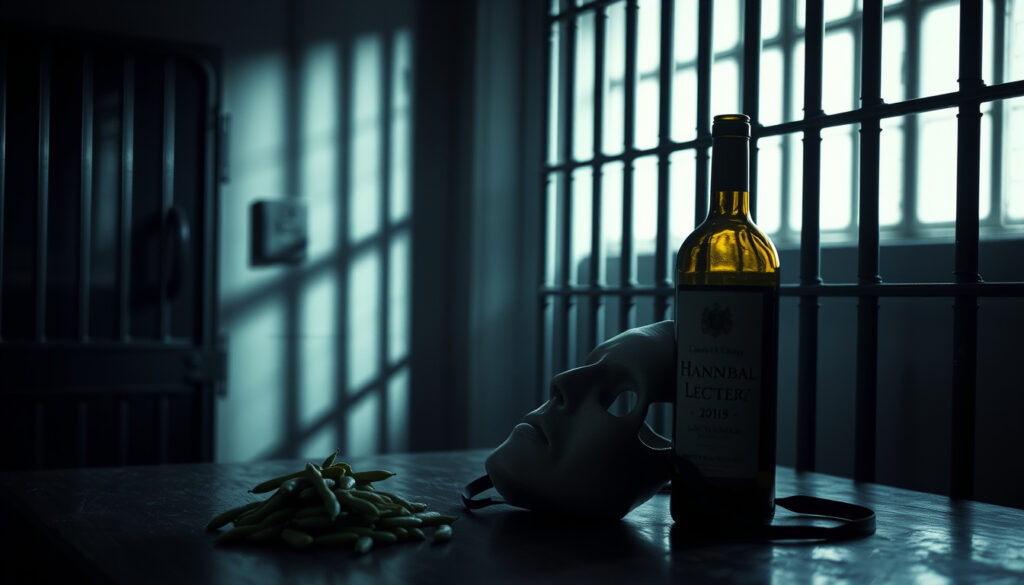
Cast of The Silence of the Lambs 2: Hannibal Full List & Details
Julianne Moore replaced Jodie Foster as Clarice Starling in Hannibal (2001), Anthony Hopkins reprised his Oscar-winning role as Hannibal Lecter, and Gary Oldman vanished under prosthetics to play Mason Verger—without even getting credited. The cast dynamics behind this sequel are as complex as the film’s infamous dinner scenes.
Director: Ridley Scott · Release Year: 2001 · Hannibal Lecter: Anthony Hopkins · Clarice Starling: Julianne Moore · Mason Verger: Gary Oldman (uncredited)
Quick snapshot
- Hannibal (2001) is the direct sequel to The Silence of the Lambs (Rotten Tomatoes)
- Julianne Moore replaced Jodie Foster as Clarice Starling (ScreenRant)
- Gary Oldman played Mason Verger but received no theatrical credit (ScreenRant)
- Whether all actresses formally auditioned or were just considered
- The precise timeline of Dino De Laurentiis’s announcement spoiling Oldman’s cameo
- Foster declined in 2000; Moore cast and filmed late 2000–early 2001
- Oldman publicly discussed the billing dispute in SAG-AFTRA interviews starting 2014
- No official Silence of the Lambs Part 3 announced; only the prequel Hannibal Rising (2006) exists
Hannibal brings together seven principal roles worth tracking: the returning Hopkins, the newly cast Moore, and a supporting cast that reads like a who’s-who of character actors.
| Role | Actor | Notes |
|---|---|---|
| Hannibal Lecter | Anthony Hopkins | Reprised role from The Silence of the Lambs (1991) (Britannica film reference) |
| Clarice Starling | Julianne Moore | Replaced Jodie Foster; trained 3 weeks with FBI agents (ScreenRant casting details) |
| Mason Verger | Gary Oldman | Uncredited in theatrical release; extensive prosthetics (ScreenRant billing report) |
| Paul Krendler | Ray Liotta | U.S. Attorney; played opposite Moore’s Clarice in key scenes |
| Rinaldo Pazzi | Giancarlo Giannini | Chief Inspector in Florence pursuit |
| Barney | Frankie Faison | Hospital orderly who assists Lecter |
| Allegra Pazzi | Francesca Neri | Pazzi’s wife |
| Dr. Cordell Doemling | Željko Ivanek | Verger’s physician |
Who played Clarice Starling after Jodie Foster?
Julianne Moore took on the role that defined Jodie Foster’s career a decade earlier. The casting was straightforward in result but complex in process. Foster had been the definitive Clarice in The Silence of the Lambs, earning an Oscar for her work with Hopkins. When she declined to return for the sequel, the filmmakers needed someone who could stand beside Hopkins without being swallowed by the role.
Julianne Moore’s role
Moore was paid $3 million for the part—substantially less than the $15 million reportedly offered to Foster for her return (YouTube: 15 Hidden Details). The salary gap reflects not just market timing but Foster’s established brand versus Moore’s rising star at that point. Moore underwent three weeks of training with FBI agents to prepare for weapon handling and tactical scenes (YouTube: 15 Hidden Details), giving her performance a grounded physicality that distinguished her take on the character.
Reasons for casting change
The film shifted directors—from Jonathan Demme to Ridley Scott—which may have contributed to Foster’s hesitation. Foster worked closely with Demme on the original; Scott brought a different visual sensibility. Sources indicate Foster found the script’s characterization of Clarice had “negative attributes” she refused to endorse even for the substantial payday (YouTube: 15 Hidden Details). Other actresses reportedly considered included Cate Blanchett, Angelina Jolie, Gillian Anderson, Hilary Swank, Ashley Judd, and Helen Hunt (YouTube: 15 Hidden Details), highlighting the role’s industry prestige.
The implication: Moore inherited one of cinema’s most demanding roles and made it her own despite the impossible comparison point.
Moore faced immediate backlash from some fans regardless of performance quality—a pressure inherent to franchise recasting that followed her throughout the film’s release cycle.
Why was Gary Oldman uncredited in Hannibal?
Gary Oldman disappeared into the prosthetics that transformed him into Mason Verger—and then disappeared from the credits entirely. His performance remains one of the most technically demanding in the film, yet audiences wouldn’t see his name in the theatrical credits.
Oldman’s Mason Verger performance
Oldman endured six hours daily in prosthetics, emerging nearly unrecognizable (YouTube: 15 Hidden Details). Britannica notes that Oldman “disappeared under layers of prostheses” (Britannica film overview), creating a character whose physical transformation mirrors Verger’s own disfigurement. The voice, Oldman revealed in a 2012 IGN interview, was based on author Thomas Harris himself after a brief meeting (ScreenRant interview report). Verger is Hannibal Lecter’s sixth victim, seeking revenge after being fed his own face (Rotten Tomatoes synopsis).
Uncredited status reasons
Oldman chose to go uncredited due to a billing dispute. In his own words from a SAG-AFTRA interview, “The producers wanted him to publicize it—confirming his name meant something to the project—but he was being offered neither the billing nor pay” (ScreenRant billing analysis). Co-producer Martha De Laurentiis explained the situation: “Dino De Laurentiis announced Oldman’s casting day before shooting,” which spoiled the surprise and “we couldn’t deny that he was in the movie. [Oldman] got really pissed off” (SlashFilm production report). Oldman eventually returned on condition of no billing—essentially a private agreement that left him offscreen but present in the film.
What this means: The billing dispute reflects Hollywood’s perennial tension between creative contribution and contractual recognition, with Oldman sacrificing credit to preserve a filmmaking choice (the surprise reveal).
Oldman’s uncredited status means many viewers never knew a performer of his caliber was in the film—a testament to how deeply prosthetics and performance can override star recognition.
Why did Jodie Foster not want to do Hannibal?
Jodie Foster famously turned down the sequel despite being offered $15 million—a figure that would represent a career-high payday for most actors. Her refusal came down to creative integrity, not money.
Foster’s objections to script
Reports indicate Foster found the script’s portrayal of Clarice Starling had “negative attributes” she refused to endorse (YouTube: 15 Hidden Details). The original film portrayed Clarice as a determined trainee overcoming trauma; the sequel apparently took the character in directions Foster considered incompatible with the role she had shaped. Additionally, the director change from Jonathan Demme to Ridley Scott represented a fundamental shift in filmmaking approach. Demme declined to direct the sequel himself, reportedly finding the material too lurid for his sensibilities (YouTube: 15 Hidden Details).
Impact on franchise
Foster’s departure forced a complete recalibration of the film’s identity. Hopkins remained as the gravitational center, but without Foster, the dynamic shifted. Moore brought a different energy—perhaps more vulnerable, certainly less iconographically established. The film earned $351 million worldwide against a $105 million budget, making it commercially successful despite—or perhaps because of—the casting change.
The trade-off: Foster maintained creative principles at significant financial cost, while Moore found professional opportunity in another actor’s veto.
Foster’s absence created an unfillable gap for longtime fans of the original—Moore’s performance, though competent, faced unfair comparison to an iconic original.
Is there a part 3 of Silence of the Lambs?
Hannibal (2001) stands as the direct sequel to The Silence of the Lambs, picking up seven years after Lecter’s escape. No theatrical Part 3 has ever entered production.
Hannibal as sequel
The 2001 film adapts the novel’s latter half, with Mason Verger using Clarice as bait to draw out Lecter (Rotten Tomatoes). Ridley Scott directed, and the change in visual style from Demme’s intimate close-ups to Scott’s grander scale proved polarizing. The film received a 57 Metascore (TV Guide ratings) and was rated R with a 2-hour-11-minute runtime.
Later franchise entries
The only subsequent Thomas Harris adaptation was Hannibal Rising (2006), a prequel exploring Lecter’s formative years. This film introduced a young Hannibal played by Gaspard Ulliel and featured Gong Li and Rebecca Hall in supporting roles. No continuation of the main storyline—following Clarice post-Hannibal—has materialized.
The rights situation involving Harris’s novels and the original novel’s ending makes a direct sequel complicated. No studio has announced official development as of this writing.
Full Cast List of Hannibal (Silence of the Lambs 2)
Beyond the headline roles, Hannibal features a deep supporting cast drawn from American and international cinema.
Anthony Hopkins as Hannibal Lecter
Hopkins reprised his Oscar-winning role from The Silence of the Lambs (Britannica), bringing the character’s elegance and menace to the sequel. His screen time was reduced compared to the original, with the film distributing focus across more characters.
Ray Liotta as Paul Krendler
Ray Liotta played U.S. Attorney Paul Krendler, who becomes entangled with Verger’s schemes. Liotta brought his characteristic intensity to a character caught between institutional loyalty and personal corruption.
Supporting roles
The supporting cast includes Frankie Faison as Barney (the hospital orderly), Francesca Neri as Allegra Pazzi, and Željko Ivanek as Dr. Cordell Doemling (TV Guide cast listing). Giancarlo Giannini portrayed Chief Inspector Rinaldo Pazzi, whose pursuit of Lecter takes him from Florence to Baltimore (Hannibal Fandom Wiki). Production used nearly 100 real locations from Florence to Washington, with the opening drugstore raid filmed in Richmond, Virginia with real FBI advisers (YouTube: 15 Hidden Details).
The pattern: Hannibal assembled character actors known for transformative performances—a casting philosophy that prioritized craft over marquee names in supporting positions.
Gary Oldman (Actor, Mason Verger): “His issue was that the producers wanted him to publicize it—confirming his name meant something to the project—but he was being offered neither the billing nor pay.”
Martha De Laurentiis (Co-producer): “[Thanks to Dino’s announcement] we couldn’t deny that he was in the movie. [Oldman] got really pissed off.”
Upsides
- Julianne Moore delivered a committed performance despite impossible comparison
- Gary Oldman’s prosthetics work remains technically remarkable
- Film grossed $351M worldwide, proving commercial viability
Downsides
- Jodie Foster’s absence created an unfillable gap for longtime fans
- Oldman’s uncredited status deprived him of recognition
- No official Part 3 means the story remains unresolved
For readers curious about the casting controversies that shaped a landmark sequel, the details above show that behind-the-scenes disputes often matter as much as on-screen performance. The cast of Hannibal represents not just who appears on screen but who almost appeared—and why they didn’t.
Related reading: Cast of Flowers in the Attic The Origin · Cast of We Live in Time
Hannibal features Hopkins reprising Lecter alongside Julianne Moore’s Clarice, with the plot, cast, and reviews guide unpacking key changes and audience reactions.
Frequently asked questions
Did Anthony Hopkins and Jodie Foster get along?
No public feud ever materialized between Hopkins and Foster. When asked about rumored conflicts, Hopkins publicly dismissed such speculation, reportedly stating he bore no ill will toward Foster’s decision. Foster has rarely discussed her choice publicly, maintaining professional silence on the matter.
What is the famous line in Silence of the Lambs?
“I ate the liver with some fava beans and a nice Chianti.” is perhaps the most iconic line. Hannibal Lecter delivers this line while describing his crimes to Clarice Starling over dinner—a moment that defines the character’s theatricality.
Did Clarice offer her breast to Hannibal?
No scene in The Silence of the Lambs depicts Clarice offering her breast to Lecter. This detail appears in Thomas Harris’s novel but was not adapted to the 1991 film. The 2001 sequel Hannibal includes scene elements from the novel that were not in the first film.
What are the allegations against Gary Oldman?
Oldman’s personal life has generated media coverage unrelated to this film, but his Hannibal performance was universally praised for its technical achievement. The uncredited status related solely to a billing dispute with producers, not any controversy about his acting.
Who played Mason Verger in Silence of the Lambs 2?
Gary Oldman played Mason Verger in Hannibal (2001), appearing uncredited in theatrical releases due to a billing dispute with producers over credit and pay.
Is there a Hannibal Rising cast list?
Hannibal Rising (2006) serves as a prequel, following a young Hannibal Lecter. The cast includes Gaspard Ulliel as young Hannibal, Gong Li as Japanese businesswoman Mitsuko, and Kevin Macdonald as a young version of Dr. Chilton. This is separate from the main sequel timeline.
Who directed the Silence of the Lambs sequel?
Ridley Scott directed Hannibal (2001), replacing Jonathan Demme from the original. Scott brought his signature visual scale to the material, filmed across nearly 100 locations in Florence, Washington, and Virginia.
More related posts
 What Is a Chromebook – Features, Differences and Student Guide
 Today’s Premier League Results – Matchweek 31 Scores and Table
 Pet Drugs Online Discount Code: Save Safely on Pet Medications
 When Is Easter in 2026? April 5, Good Friday & Easter Monday
 Elf on the Shelf: Ideas, Rules & Where to Buy in Ireland
 Georgie Glen: Call the Midwife Actress Biography
 Paris Fashion Week 2025: Complete Guide for First-Time Attendees
 Sir Jim Ratcliffe: Net Worth, Ineos Debt, Man Utd Stake
